
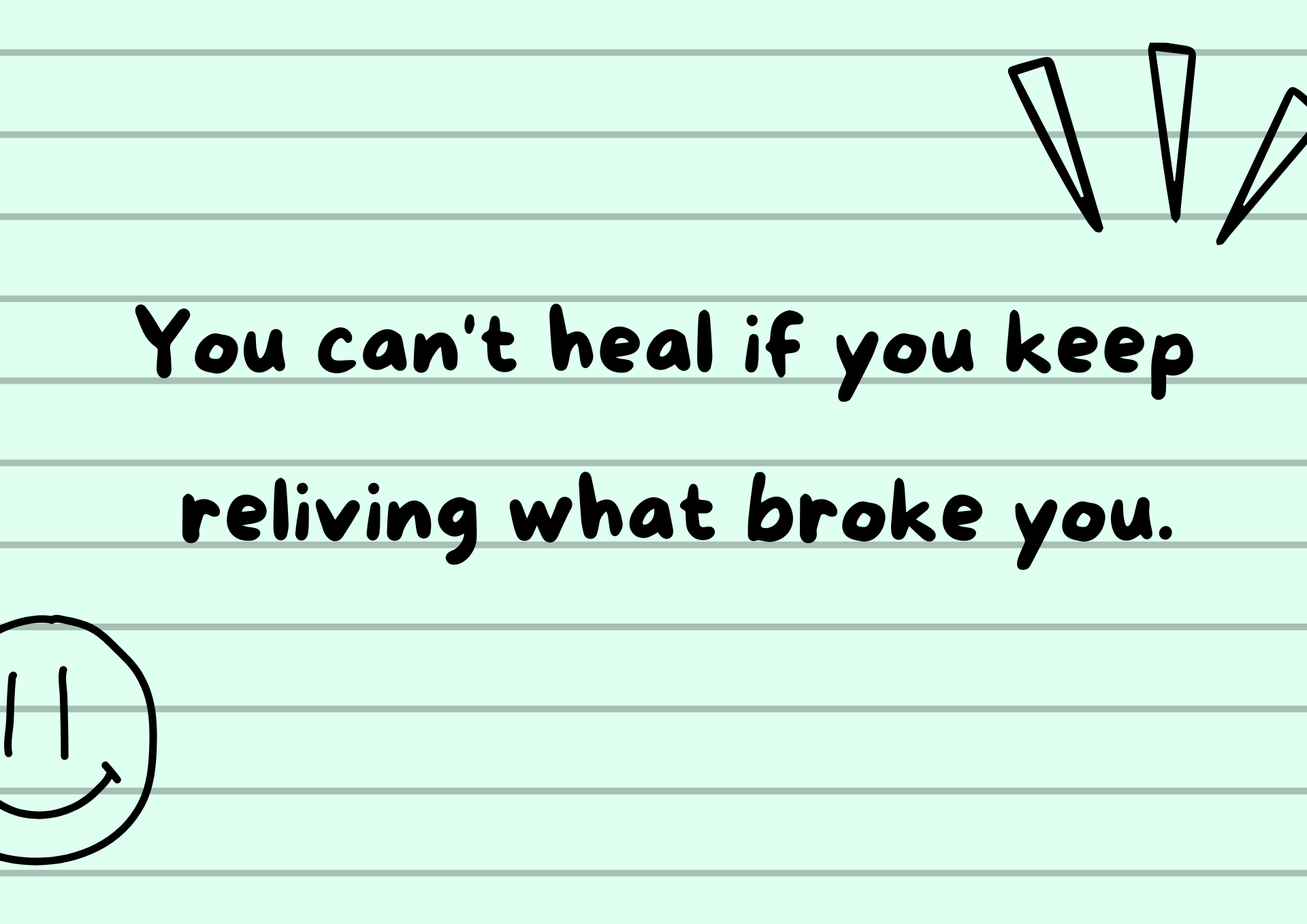
Let’s be real—trauma doesn’t just disappear, and we start reliving trauma and can’t stop.
Sometimes, it appears in the middle of the night in a flashback. Sometimes, it visits you unannounced during the day. And sometimes, it plays on repeat in your head like a film you are unable to switch off.
If you have ever felt stuck reliving the worst moments of your life, you are not alone. It’s exhausting, overwhelming, and confusing. But here’s the good news: there are ways to gently get yourself out of that loop and into a more peaceful, grounded place.
Let’s walk through this together, and ways to stop reliving trauma.
1. Rebuild Your Sense of Safety
When you have gone through a traumatic experience, your nervous system is stuck in hyperalert—like a car alarm that doesn’t shut off. To start, you need to remind your brain that you are safe today.
Create Personal Safe Space
Find a spot where you can catch your breath—your bed, maybe a corner with a pillow, or a comfy chair. Add things that make you feel relaxed: a nice book, a soft blanket, a candle, maybe even a plant.
Stick to a Schedule
Trauma can make life feel chaotic. But even simple routines can help restore a sense of control. Stick to the same wake and sleep schedule each day. Eat regular meals. Carve out 10 minutes daily just for yourself.
2. Ground Yourself When the Past Tries to Take Over
When a memory or flashback hits you, it seems like it’s all happening over again. You are not there, though—you are here. With the grounding technique, you get back to the present.
Try the 5-4-3-2-1 Technique
Look around you and say:
- 5 things that you see
- 4 things you touch
- 3 things you hear
- 2 things you smell
- 1 thing that you taste
This easy practice helps you reconnect with your body.
Breath With Purpose
When panic strikes, your breathing gets shallow. Take back control with this progression:
- Breath in for 4 counts
- Hold for 2
- Breath out for 6
Do it a few times while you repeat, “I’m safe. I’m here.”
3. Tune Into Your Thoughts—Then Gently Shift Them
Trauma can fill your mind with harsh thoughts: “I’ll never be okay.” Or “It’s happening again.” This kind of self-criticism is understandable, but they don’t always tell the truth.
Notice, Then Name
Instead of trying to push feelings away, try this:
- “I notice fear.”
- “This is sadness in my chest.”
By naming what you are experiencing, you diminish some of its strength. It may feel overwhelming, but remember—this is just something you’re dealing with, not something that makes up who you truly are.
Challenge the Inner Critic
On paper, list the thoughts that constantly resurface. Then ask:
- Is this 100% true?
- How would I respond if a friend were going through this?
For example, instead of “I’ll always be stuck,” us “I’ve gotten through so much already. I’m working with it.”
Practice Self-Compassion
You are not weak to be stuck. Tell yourself:
- “It’s okay to feel this way.”
- “I’m doing my best, and that’s enough.”
Self-kindness is healing when your own internal world is distressing.
4. Therapy Can Help—and It’s okay to Ask for it
You don’t always have to walk through your difficult situation by yourself. A lot of individuals find real relief with a therapist.
Try These Therapy Options:
- CBT (Cognitive Behavioral Therapy): Trains you in how to see and shift recurring thought patterns which keep you mired.
- EMDR (Eye Movement Desensitisation and Reprocessing): Uses guided eye movement to help your brain reprocess traumatic memories differently.
- Somatic Therapy: Active in the place where the trauma is stored in your body, and helps you release it through movement and awareness.
5. Make Gentle Self-Care Rituals
Self-care isn’t just about bubble baths. It’s about reconnecting to yourself and being kind to your body and mind.
Move Your Body—Gently
Exercise doesn’t have to be hard. Take a walk, stretch softly, and do some yoga poses. Moving your body allows you to process stress, particularly after trauma.
Get Creative
Sometimes, words can’t express it. Paint, write, doodle, sing, dance, or simply scribble in a notebook. Get creative in a way that feels good to you.
Rest Deeply
Give your nervous system a bit of a break. That may be lying in the sun for 10 minutes, listening to soothing music or doing a guided meditation at night. Silence can be powerful.
6. Talk to Someone You Trust
Trauma does make you think you are alone. You are not. We all need empathy. What most of us don’t realize is that empathy actually strengthens relationships of all types—in family, friend groups, workplace and beyond.
Share—Even a Little
Find a person you are comfortable with. It’s okay not to tell everyone everything. Try something like, “I’ve been through a lot,” or “Days are difficult for now.” Letting someone in, even just a little bit, can be such a source of emotional comfort.
Find a Peer to Help
There are trauma support groups for people who’ve suffered from trauma. Sometimes all you need is to hear, “Me too.” Healing is not always alone—it can come in community.
7. Get to Know Your Triggers
Knowing what triggers your trauma reactions allows you to prepare, defend yourself, and stop from reliving it.
Pay Attention
Pay attention to what triggers those flashbacks or emotional spirals. Is it an odour? A location? A kind of dialogue? Write them down. This is like you are writing a map of your mind.
Construct Resilience
Once you are ready (and preferably with help), you can expose yourself little by little to some of your triggers in safe ways. Your brain eventually receives the message that the past isn’t repeating itself—it’s memory.
Final Thought
You are more than what happened to you. Reliving your trauma will just stop you from being who you are.
Living through trauma can feel like being trapped in a story you didn’t write. But that’s not the end of the story.
Healing is not erasing the past. It’s forgetting how to be haunted by it so that you can start again—in your terms. It might take time, and that’s okay. Every step forward is progress.
You are not your trauma. You are not broken. And you are healing, minute by minute.