

Overthinking is the worst—it’s like your brain just won’t hit the pause button. One thought leads to another, and suddenly, you’re stuck in this never-ending loop of “what ifs” and “should I have said that?”
If you overthink everything, you’ll spend more time worrying than actually living. And When you overthink everything, you end up creating problems that weren’t even there.
Being thoughtful is cool, but when you start analyzing every little thing to death, it can make decisions 10x harder, steal your peace of mind, and keep you from just living in the moment.
So, why does this happen? The good news is, once you figure out why your brain won’t chill, it gets way easier to manage.
In this exploration, we will delve into key reasons why you might find yourself overthinking everything.
Let’s break down the reasons behind the overthinking spiral.
1. Overactive Imagination
Having a wild imagination is like having a personal movie studio in your mind—limitless ideas, unexpected twists, and bursts of creativity. It’s an amazing gift that makes you innovative, artistic, and full of unique perspectives.
But here’s the catch: that same creative mind can also throw you straight into the overthinking spiral.

How Does Overactive Imagination Fuel Overthinking?
Let’s say you’re thinking about switching jobs. Your brain doesn’t just weigh the pros and cons—it launches into full cinematic mode:
Scene 1: You land the job, love it, and become a total legend.
Scene 2: You absolutely hate it, your boss is the worst, and you regret everything.
Scene 3: Your new coworkers don’t vibe with you, and now you miss your old team.
Scene 4: You never switch jobs, stay where you are, and wonder what if forever.
It’s like your mind refuses to chill and just pick a lane. Instead of focusing on what’s most likely to happen, your imagination throws in the most extreme (and often unrealistic) scenarios—making every decision feel way bigger than it actually is.
Your imagination is a superpower—just make sure you’re the one controlling the script.
2. Perfectionism
Ever feel like nothing you do is good enough—no matter how hard you try? That’s perfectionism for you. It starts with wanting to be your best, but somehow turns into this never-ending pressure to meet impossible standards. And if you don’t? Cue the self-doubt spiral.

How Does Perfectionism Fuel Overthinking?
At first, perfectionism seems like a flex—it makes you work harder, pay attention to detail, and push yourself to the limit. But then it takes a dark turn. Instead of helping you level up, it traps you in an endless cycle of self-criticism.
School/work edition: You spend hours tweaking the tiniest details of a project, convinced it’s still not ready. Spoiler alert: it probably was—like, three hours ago.
Social life edition: You overanalyze every convo, wondering if you said something weird. Meanwhile, no one else remembers.
Decision-making edition: You avoid making choices because what if it’s the wrong one? So, you end up doing nothing.
Perfectionism isn’t all bad—it means you care. But if it’s stopping you from actually doing things, it’s time to switch things up:
Striving for greatness? Cool. But don’t let perfectionism keep you stuck. Take the shot, post the work, make the decision—you got this.
3. Low Self-Esteem
Ever feel like your mind is stuck on hard mode, constantly questioning if you’re good enough? That’s low self-esteem in action. It makes you second-guess yourself, overanalyze everything, and search for validation just to feel okay.
When you struggle with low self-esteem, it can feel like your mind is caught in a loop of doubt and self-criticism which can hinder confidence level.

How Does Low Self-Esteem Fuel Overthinking?
When you don’t fully believe in yourself, your brain works overtime trying to find proof that you do matter. But instead of reassurance, it usually just leads to more doubt.
Convo replay mode: “Did I sound stupit? Were they just being polite? Should I have said something else?”
Avoiding challenges: You could go for that opportunity, but what if you fail? Better not risk it, right?
Taking feedback personally: Even helpful criticism feels like confirmation that you’re not good enough.
Self-doubt doesn’t disappear overnight, but you can start shutting down that inner hater:
You’re not as lost as you think. You’ve got potential, value, and a lot more to offer than your self-doubt wants you to believe.
4. Past Experiences
Your past shapes you—no doubt. But sometimes, it clings to you like a glitchy playlist on repeat, making it way too easy to overthink everything. If you’ve been through failure, heartbreak, or disappointment, your brain wants to protect you. But instead of helping, it just fuels the stress.

How Does Past Experiences Fuel Overthinking?
Past experience often leads to overthinking everything, as you try to protect yourself from repeating the same mistakes or experiencing the same pain.
Your mind starts connecting old experiences to new ones, even when they’re not the same.
Relationship Edition: “What if this ends like last time? What if I get hurt again?”
Career Edition: “I messed up before… what if I fail again?”
Social Edition: “Last time I embarrassed myself—better not even try.”
And just like that, you’re stuck overanalyzing instead of actually living.
Your past may have shaped you, but it doesn’t have to define your future.
It’s about finding the balance between acknowledging your past and giving yourself permission to live in the present, free from the weight of previous mistakes which help stop overthinking.
5. Anxiety
When you experience anxiety, it’s like your mind is pull you to overthink everything.
Ever feel like your brain is constantly running “what if” scenarios like a chaotic group chat you can’t mute? That’s anxiety for you. It convinces you that you have to overthink everything so that somehow it make you feel safe—when really, it just keeps you stressed.

How Does Anxiety Fuel Overthinking?
Anxiety tricks you into thinking that if you just analyze every possible outcome, you’ll be prepared. Spoiler: It doesn’t work like that. Instead, you get stuck in:
Decision Paralysis: Picking a restaurant? Feels like life or death.
Replay Mode: Rethinking a convo for the hundredth time because what if you sounded weird?
Worst-Case Brainstorming: Turning a small issue into a full-blown disaster scenario.
Anxiety makes you think that you have to overthink everything but trust—most of those thoughts? Not worth the stress. Take a deep breath, hit pause, and remember: You don’t have to figure out everything all at once.
6. Desire For Control
The desire for control is an inherent part of human nature. When faced with uncertainty, overthinking everything can provide a false sense of security.
We all want to feel that we can influence the outcomes of our lives and navigate through challenges with certainty.
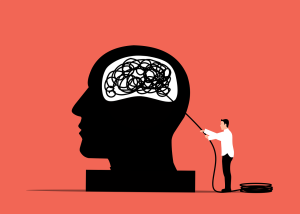
How Does Desire To Control Fuel Overthinking?
Your brain convinces you that by analyzing every possible outcome, you’re “preparing.” But really, you’re just mentally exhausting yourself.
Big life changes? What if it’s the wrong choice? What if I regret this forever?
Relationships? What if they change? What if I mess this up?
Daily decisions? What if I choose wrong? What if this tiny thing ruins everything?
And suddenly, instead of living, you’re stuck in an endless loop of what ifs.
When you overthink everything, it won’t guarantee a perfect outcome, but it will guarantee stress. Loosen the grip—you don’t need to have all the answers right now.
7. Habitual Thinking Patterns
Overthinking everything isn’t always a choice—sometimes, it’s just how your brain operates. If you’ve been stuck in the overanalyzing cycle for years, it might feel like your default setting. But here’s the thing: habits can be changed.
How Does Overthinking Everything Become Habit?
Your brain loves patterns. If overthinking helped you feel “prepared” in the past (even if it actually just stressed you out), your mind keeps repeating the cycle.
Stress hits → Overthinking kicks in
Overthinking creates anxiety → Anxiety fuels more overthinking
And boom, you’re stuck in the loop.
It doesn’t even matter what the situation is—your brain just assumes overanalyzing = problem-solving, even when it’s doing the opposite.
Overthink everything feels automatic, but it’s not permanent. The more you practice letting go, the easier it gets. Your brain can learn a new way.
8. Fear of Making the Wrong Choice
A major reason you overthink everything? The fear of messing up. Your brain convinces you that if you just analyze every detail, you’ll make the perfect decision. But here’s the problem—most decisions don’t have a perfect answer, just different paths with their own outcomes.
How Fear of Mistakes Traps You in Overthinking
Career decisions? What if I pick the wrong job and regret it forever?
Relationships? What if I say or do something wrong and ruin everything?
Everyday choices? What if I choose this and it backfires?
This fear makes you believe that overthinking = control. But in reality? It just keeps you stuck.
Mistakes don’t define you. Staying stuck does. Go for it—you’ve got this.
Key Takeaway
At the end of the day, overthinking doesn’t make you more prepared—it just drains your energy and fills your mind with unnecessary anxiety.
The key is to train your brain to focus on what’s real and within your control, rather than getting lost in endless “what ifs.” By shifting your mindset, trusting yourself, and embracing uncertainty, you can break free from overthinking and start living with more clarity and confidence.
Here’s how to start breaking the cycle:
- Recognize when you’re overthinking. Awareness is the first step.
- Set time limits on decisions. Give yourself a deadline and stick to it.
- Focus on what you can control. And let go of the rest.
- Practice self-compassion. You don’t have to have everything figured out.
- Take action. The more you do, the less you’ll feel stuck in your head.
Overthinking might feel automatic, but it’s not unchangeable. The more you practice trusting yourself, the quieter your mind will become. Less stress, more peace—sounds like a good deal, right?